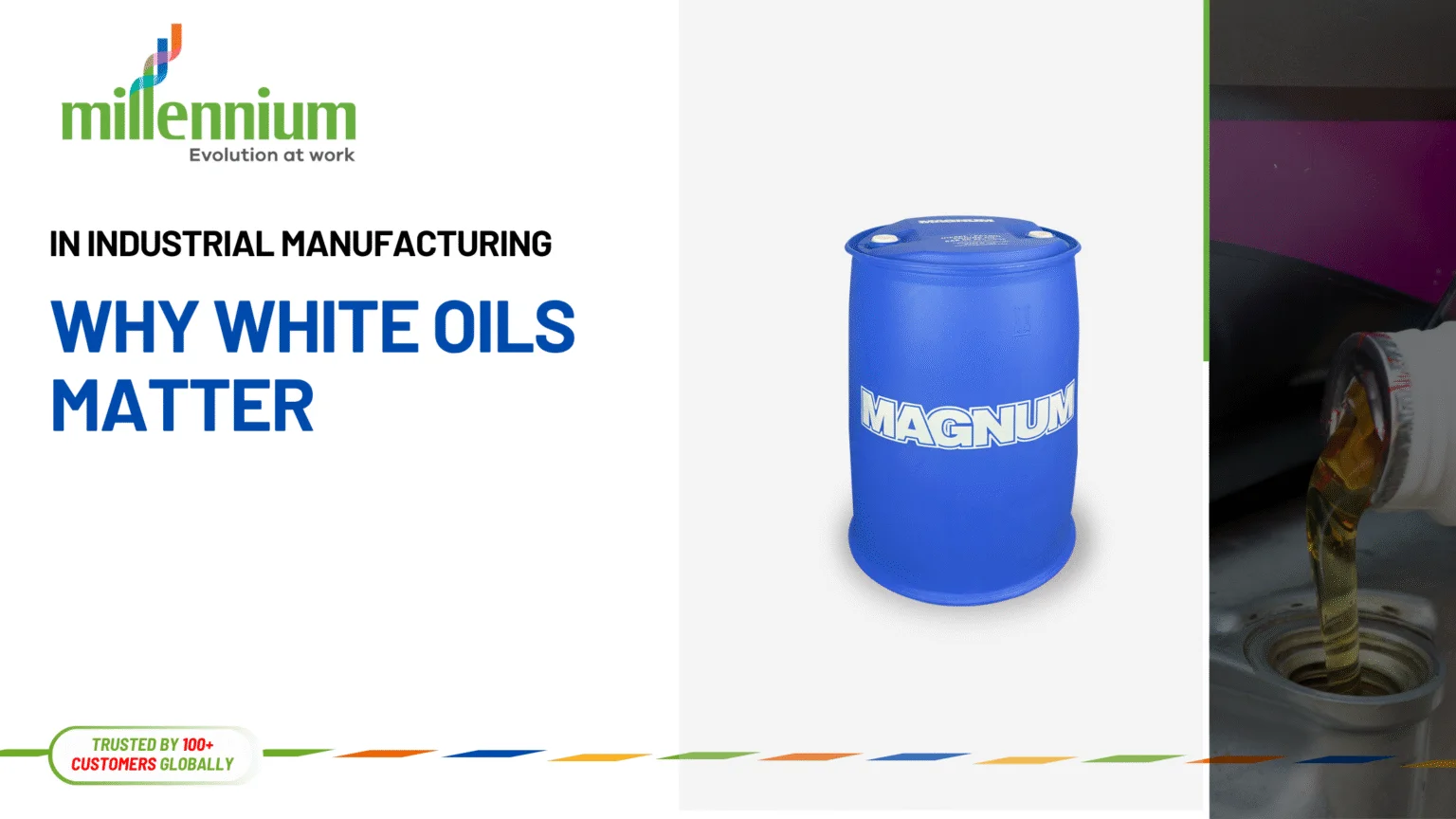
In industrial manufacturing, performance, purity, and process stability are non-negotiable. While white mineral oils are often associated with cosmetics and pharmaceuticals, their role in heavy-duty industrial environments is equally critical. From plastics to textiles and rubber processing, white oils serve as versatile, high-purity process aids that enhance efficiency, product quality, and compliance.
Companies that rely on precision manufacturing understand that even minor impurities in raw materials can compromise output. This is where white mineral oil becomes indispensable—delivering consistency, chemical stability, and regulatory safety across a wide range of industrial applications.
What Exactly Is White Mineral Oil?
White mineral oil is a highly refined, colorless, odorless petroleum-derived oil. It undergoes extensive purification processes such as hydro-treatment and hydro-cracking to remove aromatic compounds, sulfur, nitrogen, and other impurities.
The result is a chemically stable oil with:
-
Excellent oxidation resistance
-
High purity levels
-
Low reactivity
-
Minimal odor and color
-
Strong lubrication and release properties
Unlike conventional industrial oils, white oils are designed to meet stringent purity standards, making them suitable even in sensitive industrial environments where contamination control is essential.
Real-World Applications (Non-Cosmetic, All Business)
White oils are used not for beauty—but for performance; below are key industrial sectors where white mineral oil applications play a vital role:
1. Plastics & Polymers
In plastic manufacturing, white oils act as plasticizers, internal lubricants, and mold release agents. They improve flexibility, reduce brittleness, and enhance surface finish in products such as PVC sheets, packaging films, and molded components.
White oils also help:
-
Improve processing flow
-
Prevent sticking during extrusion
-
Enhance transparency in certain polymer applications
-
Reduce equipment wear
Their chemical stability ensures they do not react with polymer formulations, maintaining product integrity.
2. Adhesives & Sealants
White mineral oils are commonly used in pressure-sensitive adhesives and sealant formulations. They function as viscosity modifiers and softening agents, ensuring smooth application and consistent bonding performance.
In industrial adhesive production, they help:
-
Maintain flexible bonding strength
-
Improve spreadability
-
Stabilize formulations
-
Extend product shelf life
Because of their purity, they reduce the risk of unwanted chemical interactions within complex adhesive systems.
3. Textile Manufacturing
In textile processing, white oils are used as fiber lubricants during spinning, weaving, and knitting operations. They reduce friction between fibers and machinery components, minimizing thread breakage and improving fabric quality.
Benefits include:
-
Smooth yarn movement
-
Reduced static buildup
-
Lower machine downtime
-
Improved fabric finish
White oils are particularly valuable in synthetic fiber production, where clean processing and residue-free performance are essential.
4. Rubber & Elastomers
Rubber manufacturing relies heavily on processing oils to improve compound flexibility and workability. White mineral oils serve as safe, non-staining processing oils in rubber goods such as:
-
Seals
-
Gaskets
-
Hoses
-
Medical-grade rubber components
They enhance elasticity and improve filler dispersion while maintaining color stability—especially important in light-colored or specialty rubber products.
5. Food Packaging (Non-Contact Zones)
In food packaging manufacturing, white oils are used in non-contact applications such as:
-
Machine lubrication
-
Mold release agents
-
Processing aids for packaging films
Their high purity allows manufacturers to operate safely in regulated environments where incidental contact must meet strict compliance requirements. White oils help reduce contamination risk while maintaining equipment performance.
6. Chemical & Agrochemical Formulations
White mineral oils act as carriers and diluents in agrochemical and specialty chemical formulations. They provide excellent solvency and stability, ensuring even distribution of active ingredients.
In these industries, white oils contribute to:
-
Controlled evaporation rates
-
Improved spray performance
-
Enhanced product stability
-
Reduced chemical degradation
Their neutral profile makes them compatible with a wide range of chemical additives.
Why MAGNUM’s White Oils Stand Out
When sourcing white mineral oil for industrial use, consistency and certification matter. MAGNUM’s White Oils are engineered to meet demanding industrial performance standards while maintaining high levels of purity.
Key strengths include:
-
Consistent viscosity grades
-
Excellent thermal and oxidative stability
-
Low aromatic content
-
Uniform batch quality
-
Reliable supply chain support
MAGNUM focuses on serving industrial sectors where process efficiency and compliance are essential, ensuring that manufacturers receive oils tailored for performance—not just appearance.
Compliance, Safety & Standards
White oils used in industrial applications often comply with internationally recognized standards such as:
-
FDA regulations (for incidental contact use)
-
USP and BP purity specifications
-
REACH compliance
-
ISO manufacturing standards
Meeting these standards ensures:
-
Reduced contamination risks
-
Safer working environments
-
Regulatory peace of mind
-
Improved export eligibility
For manufacturers operating in global markets, certified white oils simplify audits and quality assurance procedures.
How to Use & Store It Right
Using white mineral oil correctly is just as important as selecting the right grade.
Picking the Right Grade
White oils are available in multiple viscosity grades depending on the application. Consider:
-
Required lubrication level
-
Processing temperature
-
Compatibility with materials
-
Regulatory requirements
Consult technical data sheets before selecting a grade for plastics, rubber, or chemical applications.
Storage & Handling
To maintain purity and performance:
-
Store in tightly sealed containers
-
Keep away from direct sunlight
-
Avoid moisture contamination
-
Maintain moderate storage temperatures
-
Use clean transfer systems
Proper storage prevents oxidation and contamination, ensuring long-term stability.
Final Word
White mineral oils are far more than cosmetic ingredients—they are foundational industrial process aids. Across plastics, textiles, rubber, adhesives, and chemical manufacturing, they improve efficiency, product consistency, and regulatory compliance.
For manufacturers focused on quality, safety, and performance, selecting high-grade white oils like those offered by MAGNUM can directly impact operational success. In modern industrial environments where purity meets productivity, white oils quietly power some of the most essential processes behind the scenes.




Leave a Reply