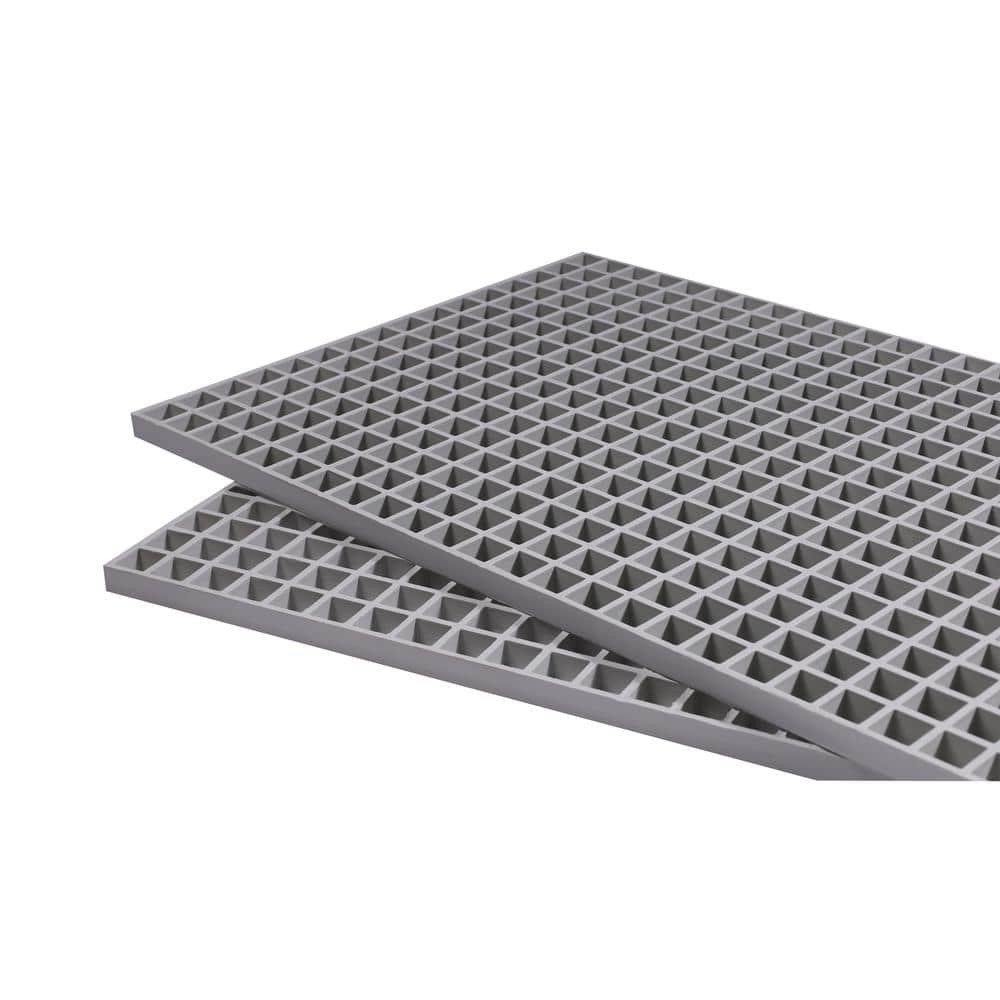
Plastic grating has emerged as a viable option for lightweight structural use in residential, commercial, and industrial settings. These panels’ open-grid design allows manufacturers to minimize weight without sacrificing strength. This design makes handling and installing the panels simple. Plastic Grating is less prone to corrosion and requires less upkeep than conventional metal systems. It doesn’t rust. It doesn’t need to be fixed often. Furthermore, installation requires less energy and time. The panels can be lifted and positioned by workers without the need for bulky equipment. For this reason, plastic grating is preferred by builders when projects need to be durable without heavy materials.
Manufacturing and Material Composition
Construction Using Thermoplastic
Manufacturers commonly use thermoplastic materials such as PVC, polyethylene, and polypropylene to create polymer grating. Strong resistance to chemicals, moisture, and exposure to the environment is offered by these materials. Thermoplastics don’t rust or corrode like metal does. They therefore function effectively in situations that are moist or chemically hostile. Humidity doesn’t affect them either. Their lightweight design provides an additional benefit. Large panels are readily carried by workers. Frequently, heavy lifting equipment is not required. As a result, labor expenses go down and installation speeds up. This advantage is particularly helpful for retrofit and remodeling projects.
Techniques for Extrusion and Injection Molding
Production methods include extrusion and injection molding ensure uniform grid patterns and consistent structure. These techniques result in panels with uniformly spaced load-bearing ribs.
The panels offer dependable support for light-duty applications due to this balanced design. The open-grid design simultaneously permits drainage and airflow. Rather than building up on the surface, water flows through it. This enhances cleanliness and safety. Additionally, customization is feasible with modern molding techniques. As a result, the grating can satisfy particular design or structural specifications.
Advantages of Structure in Lightweight Applications
A High Ratio of Strength to Weight
An outstanding strength-to-weight ratio is provided by plastic Grating. Despite being lightweight, it can accommodate storage platforms, light equipment, and pedestrian circulation. The panels lessen the whole structural load on structures because they are lightweight. Without significantly altering load estimates, engineers can incorporate plastic gratings into their designs. This lowers the complexity of construction and streamlines planning.
Resistance to Moisture and Corrosion
Plastic grating’s resistance to moisture and corrosion is still one of its main advantages. Plastic does not decompose in the presence of water, ocean, or numerous chemicals, in contrast to metal substitutes. As a result, it performs effectively in wastewater treatment facilities, food processing facilities, and car washes. The material maintains its strength and shape even after prolonged exposure to standing water or humidity. It is difficult to weaken.
Uses in Contemporary Construction
Access Platforms and Walkways
It is common practice to put plastic grating in walkways and high access platforms. The traction is enhanced by the open-grid surface. Liquids flow through with ease. As a result, there are less slip dangers. Safer footing is advantageous to workers, particularly in locations where spills happen regularly.
Support for Mezzanine and Storage
FRP grating is also a good option for mezzanine flooring in light industrial buildings and warehouses. It keeps the structure from becoming overly heavy while supporting foot activity and stored commodities. Businesses may readily modify the layout when storage requirements vary. Plastic grating is a useful flooring option because of its adaptability.
Areas for Ventilation and Drainage
Plastic grating works effectively in drainage systems and ventilation floors. The open layout encourages airflow. It keeps water from accumulating. As a result, it promotes cleanliness and hygienic standards in facilities used for farming and food production.
Benefits of Safety and Maintenance
Non-slip Surface
Manufacturers often mold anti-slip textures directly into the surface. This feature improves grip and increases safety. In wet conditions, the slip-resistant surface reduces the risk of accidents.
Requires Little Upkeep
Compared to metal competitors, plastic gratings require less upkeep. It doesn’t require protective coatings, painting, or galvanizing. The material keeps its look and functionality over time because it doesn’t rust or corrode. As a result, maintenance expenses stay low. Click here if you want to know more about tarpaulins.
Economic and Environmental Advantages
Additionally, plastic grating promotes environmentally friendly building methods. Many firms employ recyclable materials in their production process. Often, the grating can be recycled at the end of its useful life. This lessens the influence on the environment. Economically speaking, the lightweight design reduces the cost of transportation. Over time, lower replacement and maintenance costs increase total cost effectiveness.




Leave a Reply