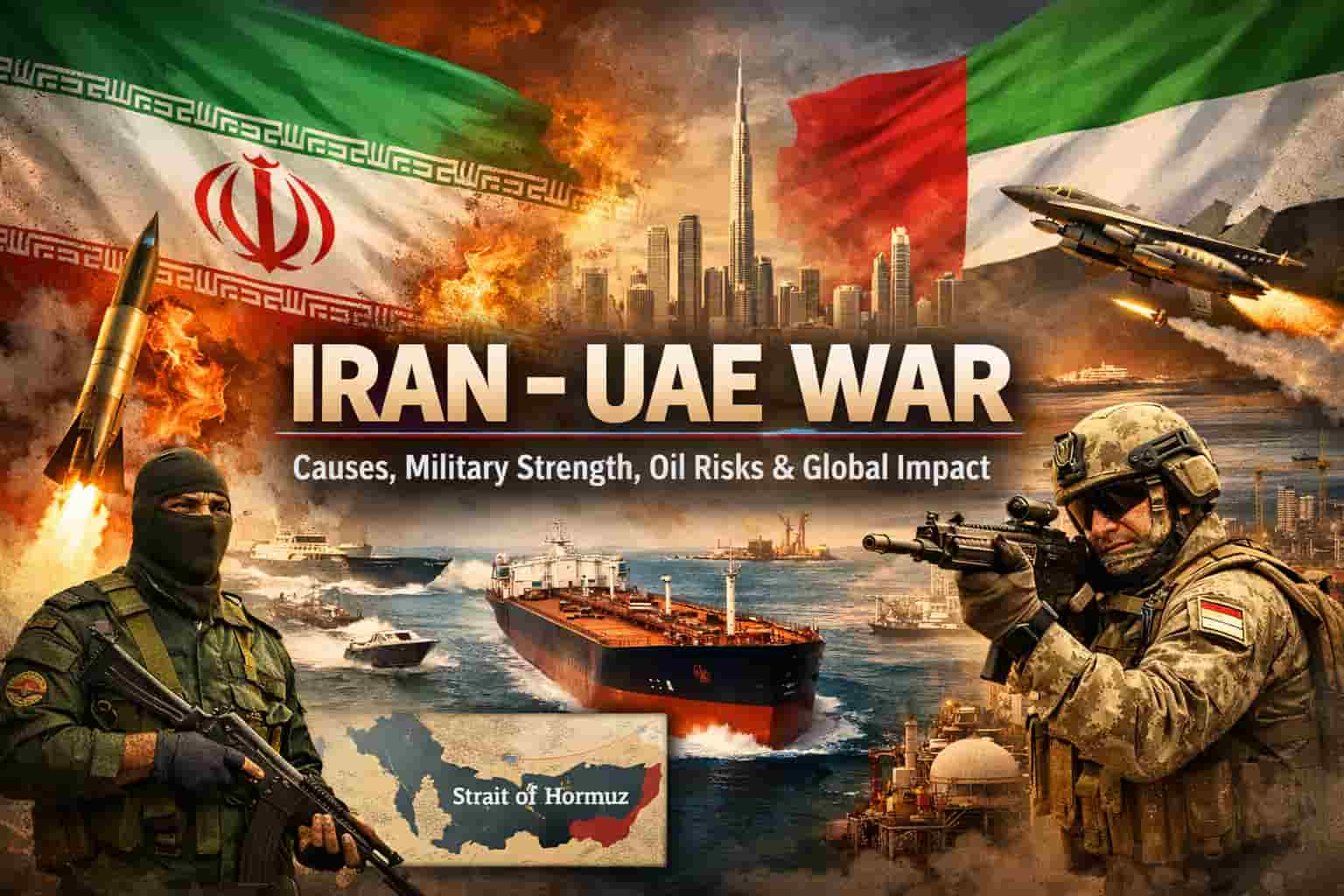
The conflict has raised serious concerns about regional stability, global energy supply, and the risk of a wider Middle East war.
Causes of the Iran UAE War
The current conflict did not start suddenly. It developed after years of political tensions, regional rivalries, and military alliances.
One major trigger was the escalation between Iran and Western allies. After large military strikes against Iran, Tehran launched retaliatory attacks across the Gulf region, including the UAE.
Iran claims it is targeting foreign military bases and strategic facilities linked to its opponents. However, several attacks have affected civilian infrastructure and energy facilities in Gulf countries.
Another reason for the conflict is the growing rivalry for influence in the Middle East. Gulf countries, including the UAE, have strengthened military and diplomatic ties with Western powers, which Iran views as a threat to its security.
As a result, the Gulf region has shifted from diplomatic competition to direct military confrontation.
Military Strength: Iran vs UAE
Iran has one of the largest military forces in the Middle East. It possesses a large number of missiles, drones, and naval units that can operate across the Persian Gulf. Iran has also invested heavily in asymmetric warfare tactics such as drone swarms and missile strikes.
During the current conflict, Iran reportedly launched more than 180 ballistic missiles and hundreds of drones toward the UAE and other regional targets.
The UAE, on the other hand, has a smaller military but is considered technologically advanced. Its armed forces rely on modern air defense systems, fighter jets, and strong partnerships with Western allies.
UAE air defense systems have intercepted several incoming missiles and drones, preventing major damage in many cases. Despite this, the attacks show how vulnerable Gulf countries can be during large missile barrages.
Oil Supply and Strait of Hormuz Risks
One of the biggest global concerns in the Iran UAE war is the threat to oil supply. The Persian Gulf contains some of the world’s largest oil exporters.
A key location in this crisis is the Strait of Hormuz. Around 20 percent of global oil shipments pass through this narrow waterway between Iran and the Gulf states.
Iran has threatened to disrupt shipping through the strait, and attacks on ships and energy facilities have already reduced tanker traffic. This has pushed oil prices above $100 per barrel during the conflict.
If the strait closes completely, global energy markets could face one of the biggest supply shocks in decades.
Global Economic and Political Impact
The effects of the Iran UAE war are not limited to the Middle East. The conflict is already affecting global trade, energy markets, and economic stability.
Higher oil prices can increase fuel costs, transportation expenses, and inflation worldwide. Economists warn that a prolonged conflict could slow global economic growth and even trigger a recession.
The war also risks drawing more countries into the conflict. Several Gulf states, international naval forces, and Western allies are closely monitoring the situation and protecting shipping routes in the region.
At the same time, diplomatic efforts are ongoing to prevent further escalation and restore stability.
Conclusion
The Iran UAE war represents one of the most serious security crises in the Middle East in recent years. Military strikes, threats to oil supply, and rising geopolitical tensions have created uncertainty across global markets.
If the conflict expands or continues for a long period, its effects could be felt far beyond the Gulf region, influencing energy prices, global trade, and international politics.




Leave a Reply