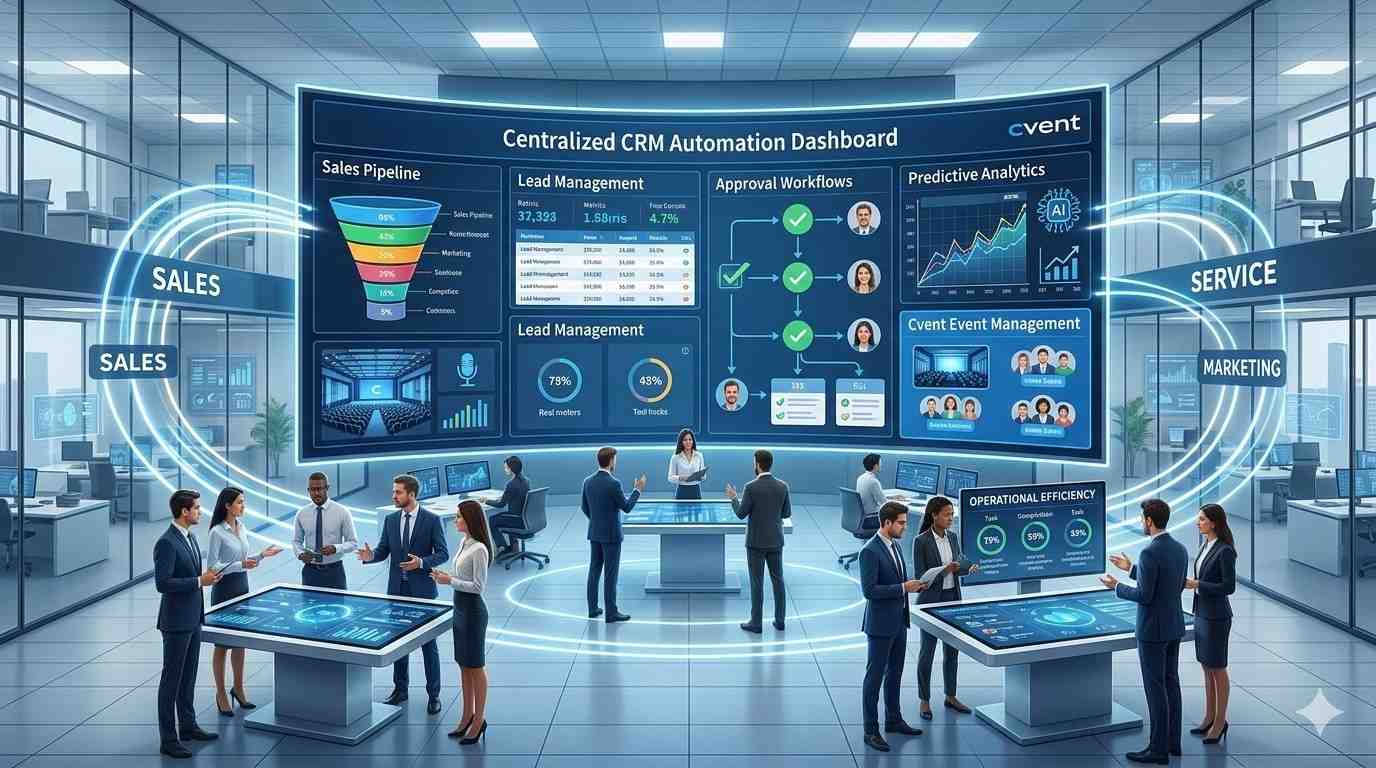
Modern organizations operate in complex environments with multiple systems, processes, and data sources. While these structures enable scale, they also create operational bottlenecks that slow productivity. Teams often spend significant time managing repetitive tasks, reconciling data, or manually updating records. Customer Relationship Management (CRM) platforms, combined with automation, provide a solution that streamlines workflows, improves data accuracy, and enhances overall operational efficiency.
According to recent research, organizations leveraging CRM automation experience up to a 30–40% reduction in manual effort across sales, marketing, and service teams. This improvement allows employees to focus on strategic activities rather than administrative work. Furthermore, businesses that integrate CRM platforms with event management and marketing tools achieve greater visibility into customer interactions and campaign performance.
For example, implementing Cvent Integration with Salesforce allows event and marketing teams to synchronize attendee data, registrations, and engagement metrics directly with CRM records. This seamless connection eliminates manual data entry, reduces errors, and provides sales teams with real-time insights into event-driven opportunities. Consequently, teams can follow up promptly with high-value leads and better prioritize outreach activities.
CRM automation not only accelerates business processes but also creates a scalable operational framework. By reducing friction across sales, marketing, and support departments, organizations increase efficiency, enhance customer experiences, and drive revenue growth. In the competitive digital landscape, removing operational bottlenecks has become critical for organizational success.
Understanding Operational Bottlenecks in CRM Systems
Operational bottlenecks occur when processes or systems slow down workflows, reduce productivity, or hinder decision-making. In CRM environments, these bottlenecks often arise due to:
-
Manual data entry across multiple systems
-
Disconnected departmental processes
-
Delayed approvals and quote generation
-
Inconsistent workflows between sales, marketing, and support teams
Without automation, these bottlenecks escalate as organizations grow. Teams spend more time reconciling information than engaging customers. Decision-making also suffers because leadership lacks real-time insights into business operations.
Identifying bottlenecks is the first step in implementing effective CRM automation. Organizations should assess workflow inefficiencies, repetitive tasks, and data inconsistencies. This evaluation helps prioritize automation initiatives that deliver the highest impact.
Key Benefits of CRM Automation
CRM automation provides multiple benefits for revenue-generating teams. These advantages extend across operational, strategic, and customer-focused dimensions.
Streamlined Workflows
Automation ensures that routine tasks are executed consistently without manual intervention. Lead assignment, follow-up reminders, and data updates occur automatically, reducing administrative burdens.
Increased Data Accuracy
Manual data entry often leads to duplication, errors, or incomplete records. Automated processes validate entries, synchronize systems, and maintain a single source of truth. This accuracy improves reporting, forecasting, and analytics.
Faster Response Times
Automation accelerates response times across sales, marketing, and support teams. Workflow triggers and notifications ensure timely follow-ups and faster issue resolution.
Enhanced Customer Experience
By automating repetitive tasks, employees spend more time interacting with customers. CRM automation enables personalized communication based on accurate, up-to-date customer information.
Cross-Department Alignment
Automated workflows help align departments by connecting sales, marketing, and service processes. Teams work with consistent data and shared performance metrics, reducing operational friction.
Core CRM Automation Capabilities
Organizations can implement several automation capabilities within CRM systems to eliminate bottlenecks effectively.
Lead Management Automation
Automated lead scoring and assignment ensure that high-priority prospects are routed to the right sales representatives. This improves conversion rates and reduces delays in response.
Workflow Approvals
Approval processes for quotes, discounts, and contracts can be automated. These workflows reduce delays, enforce compliance, and improve overall efficiency.
Marketing Automation Integration
CRM platforms integrated with marketing tools enable automated campaign tracking, segmentation, and nurturing workflows. Event integrations, such as Cvent, further streamline attendee management.
Reporting and Analytics
Automated reporting provides real-time insights into performance metrics. Dashboards update automatically, enabling managers to make informed decisions without manual data consolidation.
Task and Activity Management
CRM automation can create, assign, and track tasks across teams. Automated reminders ensure critical activities are completed on time, reducing operational bottlenecks.
Implementing CRM Automation Successfully
To maximize the benefits of automation, organizations should follow best practices during implementation.
Define Clear Objectives
Start by identifying specific bottlenecks and operational pain points. Determine which processes will benefit most from automation.
Align Stakeholders
Automation impacts multiple departments. Ensure alignment between sales, marketing, and support teams to gain buy-in and maintain consistent workflows.
Invest in Scalable Technology
Select CRM platforms and automation tools capable of integrating with existing systems and scaling as the organization grows. Cloud-based solutions often provide flexibility and reliability.
Train Teams
Employees must understand how automation affects workflows. Training ensures proper use of automated tools and prevents resistance or errors.
Monitor and Optimize
Automation is not static. Continuously evaluate performance metrics and adjust workflows as needed to maintain efficiency and relevance.
Overcoming Common Challenges in CRM Automation
Despite its advantages, implementing CRM automation can encounter challenges.
System Complexity
Many organizations operate with legacy tools and fragmented systems. Integrating these platforms with CRM automation requires technical expertise.
Data Quality Issues
Automation relies on accurate data. Poor data quality leads to ineffective workflows and unreliable insights. Establishing data governance is essential.
Change Management
Employees may resist automation if they perceive it as disruptive. Clear communication and training are necessary to encourage adoption.
Scalability Concerns
Automation strategies must be scalable. As the organization grows, workflows, integrations, and reporting should accommodate higher volumes and complexity.
Advanced Automation Trends in CRM
The future of CRM automation includes intelligent features powered by artificial intelligence and machine learning.
AI-Driven Insights
AI analyzes data patterns and predicts customer behavior. Teams gain insights into sales opportunities, lead prioritization, and churn risk.
Predictive Analytics
Automation systems can forecast revenue trends and suggest strategies to improve performance. Predictive workflows enhance decision-making.
Event-Driven Automation
Integrations with platforms like Cvent allow automated updates from event registrations and attendance. This ensures real-time visibility for sales and marketing teams.
Enhanced Collaboration Tools
Automation increasingly includes collaboration features that streamline communication across departments. Teams share dashboards, updates, and performance metrics automatically.
Measuring the Impact of CRM Automation
Organizations should track specific metrics to assess the effectiveness of automation.
-
Time saved on manual tasks
-
Lead-to-deal conversion rates
-
Sales cycle duration
-
Customer satisfaction and retention
-
Data accuracy and consistency
Monitoring these metrics helps refine automation initiatives and ensures continuous improvement.
Conclusion
Eliminating operational bottlenecks is critical for revenue growth and efficiency. CRM automation enables organizations to streamline workflows, improve data accuracy, and enhance collaboration across sales, marketing, and service teams. Integrations like Cvent Integration with Salesforce further optimize operations by connecting event management data with CRM records, reducing manual work and improving lead follow-up efficiency.
By implementing best practices, monitoring key metrics, and leveraging advanced automation features, organizations can transform their revenue operations. CRM automation allows teams to focus on strategic initiatives, deliver superior customer experiences, and scale business operations effectively. In an increasingly competitive landscape, removing operational friction through intelligent automation provides a measurable advantage for modern enterprises



Leave a Reply