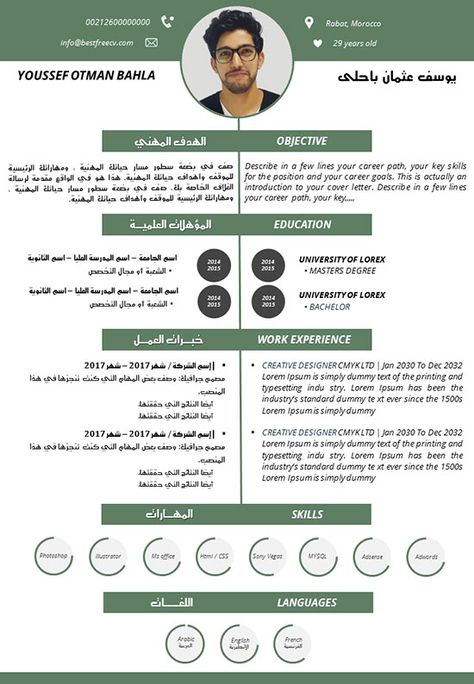
The curriculum vitae, better known as a CV, is an important part of the recruitment process in Dubai and the United Arab Emirates in general. Although it depends on global hiring practices, the Dubai labour market has its own demands and expectations due to its multicultural workforce, regionalism, and employer bias. It is imperative to know what a standard CV looks like in Dubai for professionals seeking employment in the city, whether locals or expatriates.
CV Length and General Structure of a Dubai CV.
A Dubai standard CV is usually brief but extensive. The length of the CV is supposed to be one to two pages, depending on the expectations of most employers. A page is usually enough to contain information about fresh graduates or new career professionals, whereas two pages might be used by professionals with experience, and when the information is very applicable. Sometimes the length of the CV is discouraged as the recruiters usually go through a lot of candidates, and they prefer short and simple.
A Dubai CV is professionally structured and easy to follow, with information presented in a clear, logical sequence that helps recruiters quickly evaluate a candidate’s suitability, reflecting the standards of a perfect CV maker UAE. It should have clear section headings, formatting, and a professional layout. Decorative designs or overimaginative templates are not a regular practice unless that individual is seeking employment in creative professions like design or media.
Personal Data and Contact Information.
One of the main contrasts between the CVs in Dubai and some of the Western countries is the personal information provided. A typical Dubai CV comprises full name, nationality, present location, mobile number, and professional email address. The visa status of many candidates, including a visit visa, employment visa, or dependent visa, is also provided because such information may be of interest to employers because of the local labour regulations.
Although it is not compulsory, a professional photograph is prevalent in Dubai. The image must be more recent, passport-like, and in a formal manner. Sometimes the date of birth and gender are also included, but nowadays trends are changing to more international ones where such information is optional.
Professional Summary or Profile.
A Dubai CV includes a significant element of a professional summary. This part is located at the beginning of the document, and it gives a concise history of the candidate, his/her experience, and strengths. The employers in Dubai value a concise resume articulating the professional identity of the candidate, the years of experience, the industry knowledge, and career goals.
It must also be specific to the job one is applying for and in a firm, but in a professional manner. An effectively developed summary would enable the recruiters to know within a short period what value the candidate would add to theorganisations.
Experience and Employment History.
In Dubai, the most important section of a CV is the work experience. History of employment is commonly given in reverse chronological order, with the latest position first. Every job is supposed to consist of the job title, company name, location, and dates of employment. The candidates will speak briefly about the tasks and the experience they had in each position.
Qualifications Education
The academic qualifications must be displayed in reverse chronological order, and they must include the degree earned, the name of the institution, and the year of completion. Also should be professional certifications, diplomas, or licenses that apply to the position.
Employers in Dubai usually check the educational credentials, and thus, there should be accuracy. Applicants who have foreign qualifications ought to identify the institution and country of awarding in writing so as to be clear.
Skills and Competencies
An ordinary CV in Dubai has a specific skills section. This section brings out both soft and technical skills that are pertinent to the job. Technical skills can be software skills, industry-related tools, or language skills, whereas soft skills usually include communication skills, leadership and problem solving and teamwork.
In Dubai, in a multicultural environment, the level of language proficiency is of significant importance. The language of business is mainly English, although it could be of benefit to know the Arabic language or any other language like Hindi, Urdu, or French, as per the job and the sector.
Cultural Factors and Professional Tone.
The preparation of a CV in Dubai requires cultural sensitivity and professionalism. It is to be formal, respectful, and achievement-oriented. The use of exaggeration or misleading information may result in severe repercussions, since the background checks are popular in the UAE.
One should also not provide sensitive or irrelevant information. Hobbies and personal interests can be noted in an indirect way, provided that they are valuable, though they are not a requirement. References are normally mentioned as being available on request instead of being provided in detail.
Individualisation and Adaptation to Job Needs.
Customisation is a major requirement in the Dubai labour market. Companies demand CVs that are responsive to the position and organisations, and not the standardised documents included in a number of companies. This is due to the fact that matching the skills, experience, and keywords with the job description increases the likelihood of passing the applicant tracking system and grabbing the attention of the recruiter.
Conclusion
The standard CV in Dubai is a balance between international and regional practices. It is not long, professional, and well organised, and the focus is on the pertinent experience, qualification, as well as personal information that promotes employability in the UAE setting. By comprehending these standards and structuring their CV in line with them, applicants will have an excellent chance of excelling in the competitive Dubai job market.



Leave a Reply