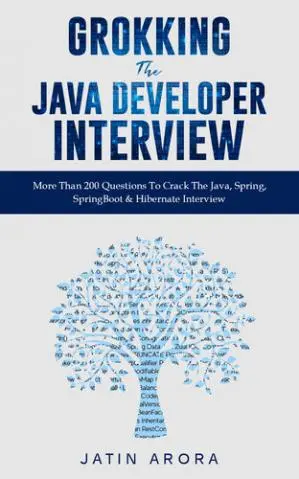
Preparing for a Java interview can feel overwhelming. I’ve seen candidates with solid coding skills struggle—not because they lacked knowledge, but because they weren’t ready for the depth and structure of real interview questions.
That’s exactly where Grokking The Java Developer Interview: More Than 200 Questions To Crack The Java, Spring, Spring Boot & Hibernate Interview becomes incredibly valuable. It isn’t just a question bank. It’s a structured preparation roadmap that helps you think like an interviewer and answer like a confident developer.
In this blog, I’ll walk you through why this resource matters, how to use it effectively, what topics it covers, and how it can sharpen your interview strategy in a practical, non-hyped way.
Why Java Interviews Are More Than Just Syntax
Most Java interviews don’t stop at:
-
What is JVM?
-
What is OOP?
-
What is inheritance?
Instead, interviewers explore:
-
Memory management in JVM
-
Internal working of HashMap
-
Multithreading challenges
-
Spring dependency injection
-
REST API architecture in Spring Boot
-
Hibernate caching mechanisms
They want clarity, depth, and real-world understanding—not memorized definitions.
This book’s 200+ structured questions simulate that layered interview style.
What Makes This Book Different?
1. Structured Question Progression
The questions move from foundational Java concepts to advanced enterprise topics like:
-
Spring framework architecture
-
Spring Boot auto-configuration
-
Hibernate ORM mapping strategies
-
Transaction management
-
Microservices basics
That progression helps you build understanding step by step instead of jumping randomly between topics.
2. Focus on Real Interview Scenarios
Instead of generic theory, many questions are scenario-based, such as:
-
How would you handle circular dependencies in Spring?
-
What happens if equals() and hashCode() are not overridden correctly?
-
How does Hibernate handle lazy loading?
These are exactly the types of questions senior developers and hiring managers ask.
Core Areas Covered in the Book
Let’s break down the main technical pillars the book addresses.
Java Fundamentals and Advanced Core Concepts
You’ll revisit:
-
OOP principles
-
Collections framework
-
Exception handling
-
Multithreading
-
Java 8 features (Streams, Lambda)
-
JVM internals
For example, understanding how garbage collection works can help you answer performance-related questions confidently.
Spring Framework Deep Dive
The Spring section doesn’t just explain dependency injection. It goes further into:
-
Bean lifecycle
-
AOP (Aspect-Oriented Programming)
-
Spring MVC architecture
-
Configuration strategies
These are frequently asked topics in mid-level and senior interviews.
Spring Boot Practical Understanding
Many companies now prefer Spring Boot for building microservices. Interviewers often test:
-
Auto-configuration
-
Starter dependencies
-
Application properties
-
REST controller design
-
Exception handling best practices
The book helps you connect theoretical understanding with real project usage.
Hibernate and ORM Mastery
Hibernate questions often trip candidates up.
You’ll explore:
-
Entity lifecycle
-
First-level vs second-level cache
-
Fetch types (EAGER vs LAZY)
-
HQL vs Criteria API
-
Transaction boundaries
If you’ve worked on real projects, this section helps articulate your practical experience more clearly.
How to Use This Book Effectively
Owning the book is one thing. Using it strategically is another.
Here’s how I recommend approaching it:
Step 1: Self-Evaluation
Start by answering questions without looking at explanations. Identify weak areas.
Step 2: Deep Dive into Weak Topics
If you struggle with concurrency, revisit:
-
Synchronization
-
Deadlock scenarios
-
Thread pools
Then return to the questions and try again.
Step 3: Simulate Mock Interviews
Ask a friend to quiz you randomly. Time your responses. Practice explaining concepts clearly—not just correctly.
Step 4: Practice Whiteboard Explanations
Explain:
-
How Spring Boot auto-configuration works
-
How Hibernate manages sessions
Clarity builds confidence.
Who Should Read This Book?
This resource benefits:
-
Freshers preparing for their first Java role
-
Backend developers transitioning to Spring Boot
-
Developers targeting product-based companies
-
Professionals preparing for mid-to-senior-level interviews
Even experienced engineers can refine their articulation of complex topics.
Practical Benefits You’ll Notice
After structured preparation, most candidates experience:
-
Improved confidence
-
Faster recall of concepts
-
Clearer technical explanations
-
Better problem-structuring ability
-
Stronger project-based storytelling
Interviews are not just about knowing answers—they are about communicating them effectively.
Common Mistakes Java Candidates Make
Over the years, I’ve noticed patterns:
-
Memorizing answers without understanding internals
-
Ignoring multithreading
-
Weak knowledge of Hibernate caching
-
Not preparing for Spring Boot configuration questions
-
Poor explanation of past project architecture
This book helps eliminate those blind spots.
Example Question Breakdown
Let’s look at how depth matters.
Question: What happens if you don’t override hashCode() when overriding equals()?
A shallow answer:
It may cause problems in HashMap.
A strong answer:
Hash-based collections like HashMap rely on hashCode() for bucket placement. If equals() is overridden without hashCode(), logically equal objects may be stored in different buckets, breaking retrieval logic.
That level of clarity is what interviewers appreciate.
Where to Access the Book
You can explore this title through educational platforms such as Netbookflix, which provides structured access to technical learning resources.
10 Frequently Asked Questions (FAQs)
1. Is this book suitable for freshers?
Yes. It starts with core Java fundamentals and gradually moves to advanced Spring Boot and Hibernate topics.
2. Does it cover Spring Boot interview questions in detail?
Yes. It includes auto-configuration, REST APIs, dependency injection, and configuration management.
3. Are Hibernate caching concepts explained?
Absolutely. It covers first-level and second-level cache along with practical ORM interview questions.
4. Is it helpful for experienced developers?
Yes. It strengthens articulation and clarifies advanced Java and Spring concepts.
5. Does it include Java 8 features?
Yes. Topics like Streams, Lambda expressions, and functional interfaces are included.
6. Can this help in cracking product-based company interviews?
Yes. Many scenario-based questions align with enterprise-level Java interviews.
7. Is multithreading covered?
Yes. Thread lifecycle, synchronization, and concurrency issues are addressed clearly.
8. Does it include Spring MVC architecture?
Yes. It explains request flow, controller structure, and configuration details.
9. Is the book theory-heavy?
No. It balances conceptual clarity with practical application.
10. How long should I prepare using this book?
A focused 4–6 week preparation cycle with mock interviews works well for most candidates.
Final Thoughts
Cracking a Java developer interview isn’t about memorizing 200 answers. It’s about deeply understanding Java, Spring, Spring Boot, and Hibernate—and explaining them clearly under pressure.
Grokking The Java Developer Interview: More Than 200 Questions To Crack The Java, Spring, Spring Boot & Hibernate Interview gives you a structured way to prepare. If you use it thoughtfully—self-testing, revising weak areas, and practicing mock interviews—you’ll walk into interviews with clarity instead of anxiety.
Preparation builds confidence. Confidence changes performance. And performance gets offers.
Make your preparation intentional, structured, and practical—and you’ll see the difference.

Leave a Reply